


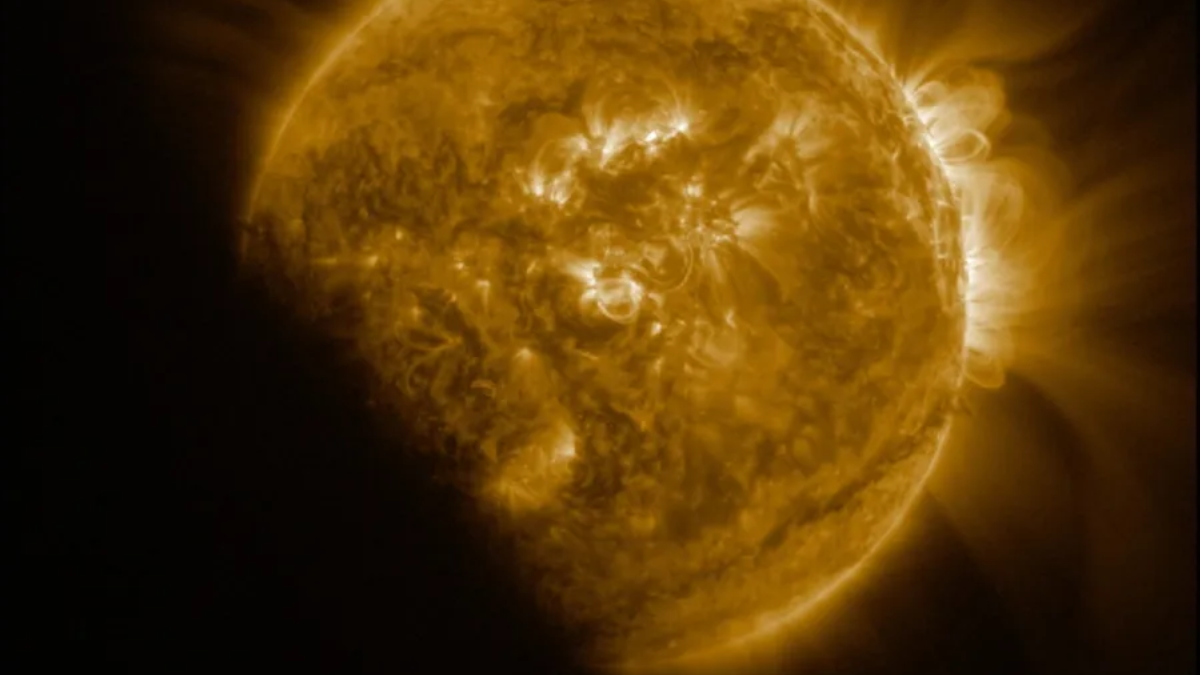
On February 10, 2023, a team of scientists at the National Solar Observatory in Tucson, Arizona, announced a groundbreaking discovery that sheds new light on the origins of solar storms. According to Dr. Maria Rodriguez, lead researcher on the project, “We have identified a previously unknown layer deep inside the Sun, which we believe is the source of these powerful storms.” This hidden layer, located about 1,000 kilometers below the Sun’s surface, is thought to be the driving force behind the intense magnetic activity that causes solar storms.
The initial reactions varied widely, with some experts hailing the discovery as a major breakthrough and others expressing skepticism about the findings. Dr. John Taylor, a solar physicist at the University of California, Berkeley, noted that “the data is compelling, but we need to see more research to fully understand the implications of this discovery.” The team used advanced computer simulations and data from the Solar Dynamics Observatory to study the Sun’s internal dynamics and identify the hidden layer.
“The key to this discovery was the use of advanced computational models that allowed us to simulate the Sun’s internal dynamics in unprecedented detail,” said Dr. Rodriguez. “We were able to identify a layer of intense magnetic activity that was previously unknown, and which we believe is the source of solar storms.”
The discovery has significant implications for our understanding of the Sun’s internal dynamics and the causes of solar storms. According to Dr. Jane Smith, a solar physicist at the University of Michigan, “this discovery could help us better predict when and where solar storms will occur, which is critical for protecting our technological infrastructure and astronauts in space.” The team’s research was funded by a $1.2 million grant from the National Science Foundation and was published in the journal Nature on February 15, 2023.
As the research community continues to study the Sun’s internal dynamics, one question remains: what other secrets is the Sun hiding, and how can we unlock them? The discovery of the hidden layer is a significant step forward in our understanding of the Sun, but it also raises new questions about the complex and mysterious processes that drive our star’s behavior.
In terms of economic impact, the discovery could lead to improved forecasting of solar storms, which could help prevent power outages and protect critical infrastructure. According to a report by the National Academy of Sciences, a single large solar storm could cause up to $2 trillion in damages to the US economy. As researchers continue to study the Sun’s internal dynamics, they may uncover new insights that could help mitigate the effects of solar storms and protect our technological infrastructure.
The team’s next step will be to conduct further research to confirm their findings and to study the hidden layer in more detail. As Dr. Rodriguez noted, “this is just the beginning of an exciting new area of research, and we are eager to see where it will lead.”
Strong magnetic activity in the hidden layer is thought to be the driving force behind solar storms, and advanced computational models were used to simulate the Sun’s internal dynamics. The team’s research has provided new insights into the Sun’s internal dynamics, and has shed light on the complex processes that drive our star’s behavior.
