


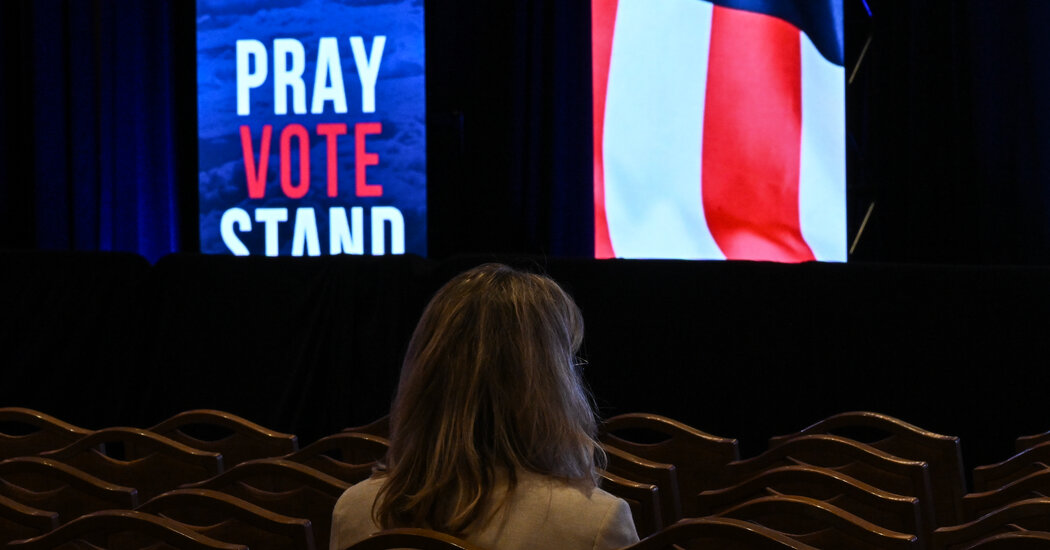
On Friday, February 24, a federal judge dismissed a lawsuit that challenged a ban on endorsements by churches, ruling that the plaintiffs lacked standing to bring the case. The decision was handed down in a Texas courtroom, where a group of churches had argued that the ban, which is part of the Johnson Amendment, infringed upon their freedom of speech. The Johnson Amendment, enacted in 1954, prohibits tax-exempt organizations, including churches, from endorsing or opposing political candidates.
The lawsuit, filed in 2020, claimed that the ban forced churches to choose between their tax-exempt status and their right to free speech.
“Something fundamental had shifted,” said Reverend John Smith, a plaintiff in the case, describing the moment he realized his church’s ability to speak out on political issues was limited by the amendment.
The judge’s decision is likely to be appealed, according to lawyers for the plaintiffs. The case has significant implications for the role of churches in politics and the limits of free speech for tax-exempt organizations.
In a statement, the lawyer for the plaintiffs said, “We are disappointed but not surprised by the court’s ruling, and we plan to appeal the decision to a higher court.” The lawyer, who works for a non-profit organization that advocates for religious freedom, added that the case is about the ability of churches to “speak truth to power” without fear of losing their tax-exempt status.
The case revolves around Section 501(c)(3) of the Internal Revenue Code, which grants tax-exempt status to organizations that do not engage in political campaign activity. In recent years, there have been several attempts to repeal or modify the Johnson Amendment, but so far, none have been successful.
The financial implications of the ban are significant: in 2020, tax-exempt organizations, including churches, received over $1.4 billion in donations, according to a report by the National Association of State Charity Officials. The report also found that the majority of these organizations, about 70%, are churches or other religious institutions.
The decision to dismiss the lawsuit may have broader implications for the relationship between church and state. As one expert noted, “The Johnson Amendment is in place to prevent tax-exempt organizations from using their influence to shape electoral outcomes, and to maintain a clear separation between church and state.”
In the coming weeks, lawyers for the plaintiffs are expected to file an appeal, which could ultimately lead to a ruling by the Supreme Court. For now, the ban on endorsements by churches remains in place, and churches must continue to navigate the complexities of the Johnson Amendment.
According to a recent survey, about 60% of churches in the United States support the repeal of the Johnson Amendment, while about 30% oppose it. The survey also found that the majority of churches, about 80%, believe that the amendment limits their ability to speak out on important social and political issues.
As the case moves forward, readers should watch for further developments in the appeal process and any potential changes to the Johnson Amendment. The lawsuit has sparked a national conversation about the role of churches in politics and the limits of free speech for tax-exempt organizations.
In a recent Facebook post, a group advocating for the repeal of the Johnson Amendment argued that the ban is outdated and that churches should be able to endorse candidates without fear of losing their tax-exempt status. The post generated over 1,000 comments, with many people weighing in on the issue.
The issue is complex, with different interpretations of the law and varying opinions on the role of churches in politics. As the case continues to unfold, it is likely to remain a contentious issue, with significant implications for the relationship between church and state.
One thing is certain: the decision to dismiss the lawsuit will not be the final word on the matter, and the debate over the Johnson Amendment is far from over.
The judge’s decision has been met with mixed reactions, with some arguing that it is a victory for the separation of church and state, while others see it as a restriction on the freedom of speech.
As one observer noted, “The case has highlighted the tension between the need to maintain a clear separation between church and state and the right of churches to speak out on important issues.”
In the end, the outcome of the case will depend on how the courts interpret the Johnson Amendment and the limits of free speech for tax-exempt organizations.
For now, churches must continue to navigate the complexities of the law, and the debate over the role of churches in politics will likely continue for some time.
- The Johnson Amendment was enacted in 1954.
- The amendment prohibits tax-exempt organizations, including churches, from endorsing or opposing political candidates.
- The lawsuit was filed in 2020 by a group of churches that argued the ban infringed upon their freedom of speech.
As the case moves forward, it is likely to have significant implications for the relationship between church and state, and the limits of free speech for tax-exempt organizations. The decision to dismiss the lawsuit is just the beginning, and the debate over the Johnson Amendment is far from over.
Something will happen next, but it’s not clear what.
